Wet, damp, or hazardous
Classify the exposure first. Wet, damp, hose-down, corrosive, and hazardous conditions can require different listings and housings.


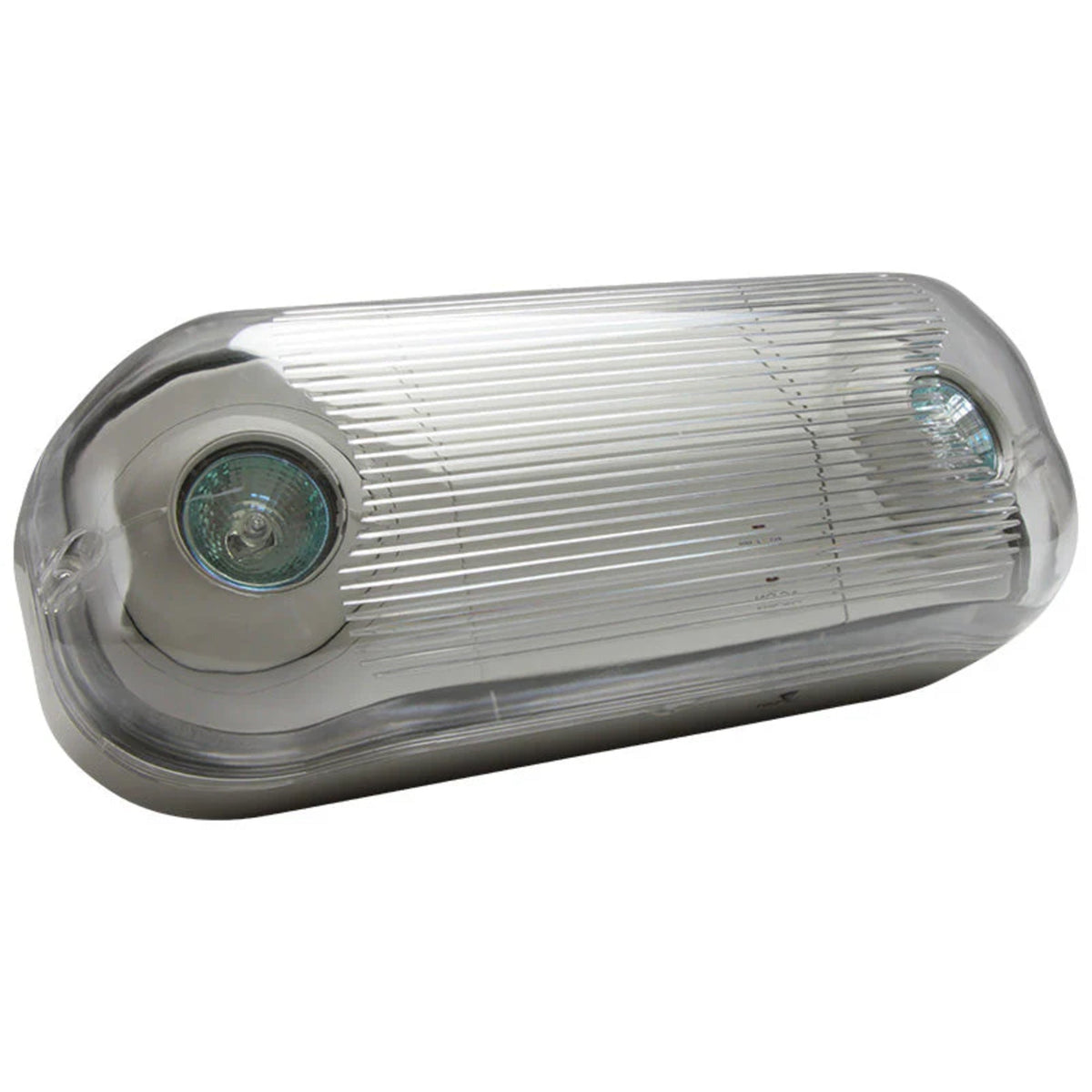
Use this page for code-required emergency egress in exposed environments. Keep general wall-pack security lighting on the wall-packs page and wet-location exit signage on its dedicated sign collection.
Shop by need
16 Products


Spec guide
Match the environment, enclosure, temperature, mounting, and emergency coverage requirement before choosing a wet-location emergency light.
Classify the exposure first. Wet, damp, hose-down, corrosive, and hazardous conditions can require different listings and housings.
Use the product's actual NEMA/IP documentation and match it to rain, spray, dust, washdown, and cleaning exposure. These labels are not interchangeable.
Confirm operating and charging temperature ranges for exterior, cold-weather, freezer, or seasonal applications.
Check wall or ceiling mounting, head aiming, spacing, height, glare, and the actual exterior egress path.
Verify UL 924 listing, emergency runtime, charge/test function, photometrics, project documents, and local AHJ acceptance.
Confirm the actual exposure, NEMA/IP or equivalent listing, temperature range, photometrics, emergency runtime, installation, project documents, and local AHJ acceptance.
Quick answers
Expand the questions that match your application, fixture-selection, or compliance review.
Damp locations may have periodic moisture, while wet locations can be exposed to water or spray. Use the product's listing and installation instructions to match the real exposure.
Use the product's actual enclosure, NEMA/IP, temperature, and listing documentation rather than relying on the word weatherproof alone.
Only when the selected product is listed and documented for the outdoor exposure. Standard indoor fixtures should not be assumed suitable for rain, washdown, or cold conditions.
The emergency runtime and backup method depend on the selected product and project. Confirm the listing, runtime, charging, and photometric requirements before ordering.